
Ukraine once again made its mark on the global cleantech stage. This year’s Cleantech Days 2025 forum, held for the first time outside Vienna – in Istanbul – became a meeting place for innovators, entrepreneurs, investors, and researchers from 20 countries. Organized by UNIDO, TÜBİTAK, and IOM, the event was a large-scale platform for sharing knowledge and innovative clean technology solutions, and a powerful space for international dialogue and cooperation. Symbolically, Istanbul – a city bridging Europe and Asia – hosted the event under the motto: “Bridging Regions and People to Accelerate Innovation for Just Transition.”
For Greencubator, participation in the forum was an opportunity to show the world that even during wartime, Ukrainian entrepreneurs continue to create solutions addressing global climate challenges. Ukraine was represented by S.Lab and the GCIP Ukraine 2.0 advanced acceleration startups – MELT WATER, Mycelia Tech, and Geodesic.Life. They presented their sustainable solutions, received valuable feedback and support, and built new contacts for further collaboration. For each founder, this trip became an important step toward expanding international connections and exchanging experience with entrepreneurs from other countries.
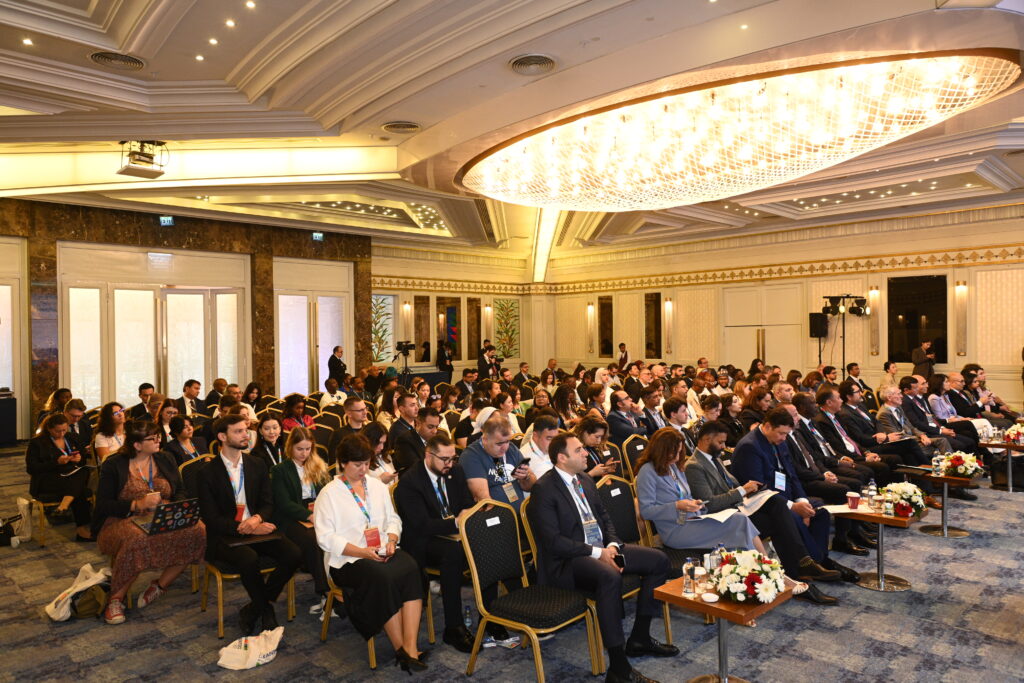
A special highlight of this year’s program was the roundtables, workshops, and trainings, which brought together the Project Management Units (PMUs) of the Global Cleantech Innovation Programme (GCIP) from all participating countries. Thanks to these events, Ukraine’s PMU – Oleksandra Danchenko and Elvira Amirova – were able to present the path of the Ukrainian cleantech ecosystem and the successes of GCIP Ukraine 2.0, while also learning from colleagues in countries where the program has been running for more than 7 years. The PMUs worked together on further development and improvement of GCIP, while adopting best practices from other ecosystems. These gatherings created a genuine space for peer-to-peer learning and mutual support.
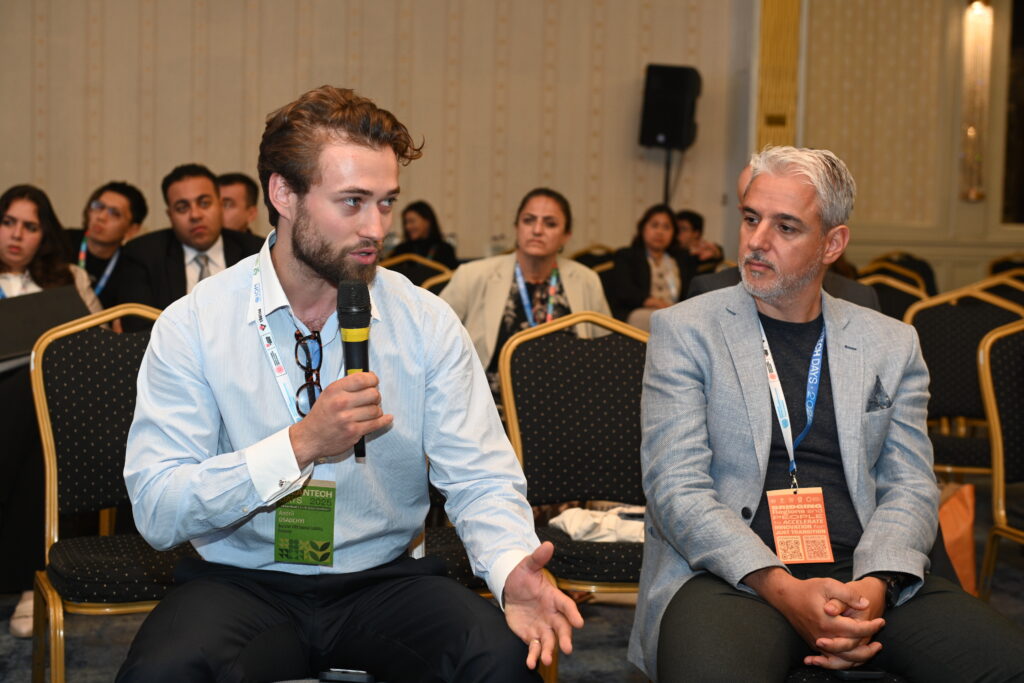
The discussion sessions also proved highly significant. In the fishbowl discussion “Financing the Future: Mobilizing Capital for Inclusive Cleantech Innovation”, Andrii Osadchyi, founder of MELT WATER, shared insights from over a decade of work on water purification innovation. He outlined key challenges for hardware startups – access to venture capital, attracting talent, and the need for early sales even at the MVP stage. Andrii stressed that startups must demonstrate a measurable impact, since proven benefits are what make a technology attractive to the market and open the door to scaling.
In the panel “Powering The Just Transition: Cleantech as a Catalyst for Low-carbon and Inclusive Industrial Development”, Roman Zinchenko, co-founder of Greencubator, drew a parallel between the green transition and economic liberation, recalling Mahatma Gandhi’s Salt March as a symbol of the independence movement. He emphasized that cleantech can become a tool for returning economic power to communities, as well as to small and medium-sized businesses, by creating not only greener but also more efficient and competitive solutions compared to the traditional “brown” economy.
Roman noted that achieving this requires not only innovative startups, but also advanced production and management practices, investors willing to become “green angels” and provide patient capital, as well as the development of local investment ecosystems and networks of mutual support. He stressed the importance of building a culture where successful entrepreneurs pass on their knowledge and experience to the next generation, sparking a wave of new greentech projects. Thus, the green transition was presented as both a movement and systemic change that brings economic independence and opens new opportunities for society.
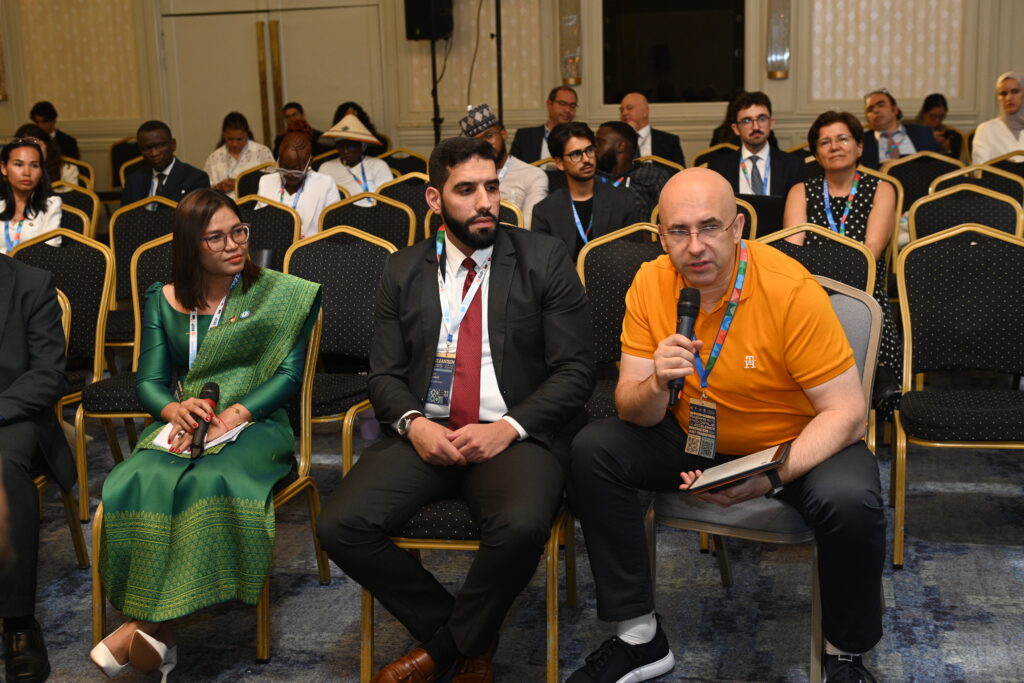
Among the key questions Roman raised for discussion:
- How to create large-scale projects that engage people in the green economy movement;
- How to improve production and management practices to achieve true efficiency;
- How to cultivate a new generation of investors – green angels and green venture capitalists – ready to provide patient capital;
- How to develop local investment ecosystems and mutual support in capital-constrained markets;
- How to ensure the transfer of knowledge and experience from successful entrepreneurs to the next generation of founders.
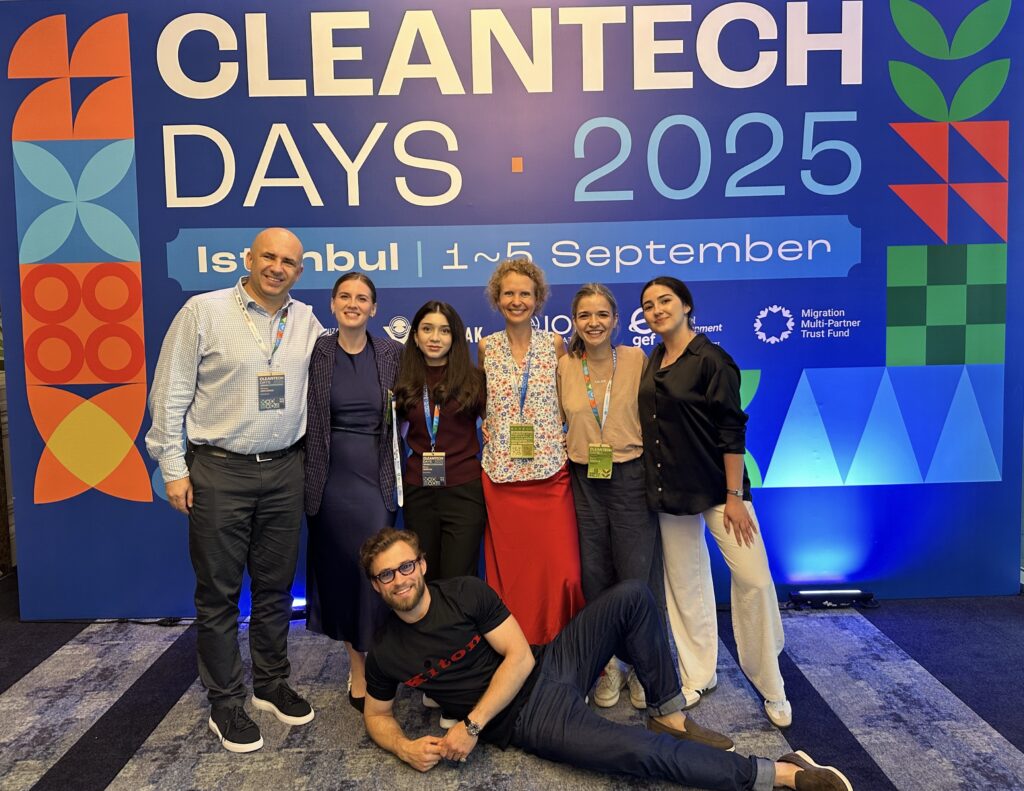
We are sincerely grateful to the organizers for the opportunity to represent Ukraine on the global cleantech stage, as well as to the GCIP PMU teams from around the world – for their inspiring partnership, knowledge exchange, and joint efforts in shaping a global innovation ecosystem!
We also thank all our partners who share our values and work with us to build a sustainable, inclusive, and just future for generations to come.


